Showing posts sorted by relevance for query winners and losers. Sort by date Show all posts

Wednesday, April 22, 2009

"Not with our money, you don't"


More unintended yet totally anticipated consequences of porkulus:

NEW YORK (AP) — U.S. venture capital investments sank 61 percent in the first quarter, dropping to the lowest level in 12 years as financiers became even warier about sinking funds into startups during a deepening recession.

In yet-another indicator that a pullback that began last summer is not abating, venture capital investments totaled $3 billion during the first three months of 2009, according to a report released Saturday by PriceWaterhouseCoopers, the National Venture Capital Association and Thomson Reuters. In the year-ago quarter, investments totaled $7.74 billion.

This is the lowest quarterly level of venture investments since the first quarter of 1997, when they totaled $2.96 billion.
The report said 549 companies received investments in the first quarter, down from 997 in the same period last year. This is the smallest number of companies to receive investments since the first quarter of 1995.


Here’s the paragraph we zeroed in on.

Alternative energy, pollution and recycling, power supplies and conservation — or "clean technology" — had been among the only bright spots during the last three months of 2008, when $971 million was invested in 67 companies. But in the first quarter, $154 million was invested in 33 companies in this sector. Compared with the year-ago quarter, the drop was almost 87 percent in investments and 50 percent in the number of companies that received funds.

It wasn’t supposed to be like this.

Why is this happening? Why isn’t private money flowing after the public money into “green” technology?

One could make the argument that public investment is simply displacing private investment – the technologies, thanks to porkulus are fully-funded.

We see something else altogether, though and which gets to the heart of our opposition to porkulus and Bailout Nation in general: misallocation of resources.

The principle of John Locke’s invisible hand of economics is that resources - human, capital and technological - would flow, naturally, to those areas of the market that demonstrated the most promise and which would yield the best return on investment.

When the state starts picking winners and losers by directing its funding to areas of the economy or technologies it deems worthy, this natural process is radically altered. The private money has anticipated that the government has already made up its mind with respect to these “winners and losers” regardless of its particular long-term viability in an open market. There are less available resources to be devoted to the real potential winners and therefore, less of a chance for those more viable technologies to be brought to market.

Also, private money may be anticipating the easing of regulatory burdens on the government designated “winner” at the expense of a more market-viable “loser” which which will further disincentivize private investments in any of the “losers”.

All in all, for predictable reasons, it looks like private money is sitting out the green revolution, for now.

Saturday, March 5, 2011

Quickies


A round-up of news items, articles, columns and blog posts that caught our eye this past week.


Good news: waste in government due to agency/bureaucratic overlap and redundancies probably even more than you would expect.


The U.S. government has 15 different agencies overseeing food-safety laws, more than 20 separate programs to help the homeless and 80 programs for economic development.

These are a few of the findings in a massive study of overlapping and duplicative programs that cost taxpayers billions of dollars each year, according to the Government Accountability Office.


A report from the nonpartisan GAO, to be released Tuesday, compiles a list of redundant and potentially ineffective federal programs, and it could serve as a template for lawmakers in both parties as they move to cut federal spending and consolidate programs to reduce the deficit. Sen. Tom Coburn (R., Okla.), who pushed for the report, estimated it identifies between $100 billion and $200 billion in duplicative spending. The GAO didn't put a specific figure on the spending overlap.


George Will on Obama and choo-choos:

Generations hence, when the river of time has worn this presidency’s importance to a small, smooth pebble in the stream of history, people will still marvel that its defining trait was a mania for high-speed rail projects. This disorder illuminates the progressive mind.

Remarkably widespread derision has greeted the Obama administration’s damn-the-arithmetic-full-speed-ahead proposal to spend $53 billion more (after the $8 billion in stimulus money and $2.4 billion in enticements to 23 states) in the next six years pursuant to the president’s loopy goal of giving “80 percent of Americans access to high-speed rail.” “Access” and “high-speed” to be defined later.

Construction cost overruns and overly optimistic ridership projections are almost assured, so why?


It's simple: it gets you out of your car and the inherent freedom and individuality it contains and into their trip where you're standing on a train platform dancing to their tune.

Totally related: Consumer Reports pans the Chevy Volt:


Consumer Reports offered a harsh initial review of the Chevrolet Volt, questioning whether General Motors Co.'s flagship vehicle makes economic "sense."The extended-range plug-in electric vehicle is on the cover of the April issue — the influential magazine's annual survey of vehicles — but the GM vehicle comes in for criticism.

"When you are looking at purely dollars and cents, it doesn't really make a lot of sense. The Volt isn't particularly efficient as an electric vehicle and it's not particularly good as a gas vehicle either in terms of fuel economy," said David Champion, the senior director of Consumer Reports auto testing center at a meeting with reporters here. "This is going to be a tough sell to the average consumer."

And this:
But GM has noted that most Americans can avoid using gasoline for most regular commuting with the Volt, while its gasoline engine can allow the freedom to travel farther, if needed.
Ah, yes... freedom.


Also related: Mickey Kaus on how the GM bailout is coming along:

Q. GM’s recent sales surge–what’s their secret? Great new models? Superior quality? A: Heavy price-cutting to goose sales (at an inevitable cost in profits). … Maybe that’s why GM stock is plunging priced so realistically.
Follow the links at the link.


Awesome: Still some more of that "new civility" we've been hearing about.
Wisconsin Democrat To Republican Colleague: “You Are F***ing Dead


Why just 10 minutes? New study: Staring at breasts is good for your health.

Guys, listen up. A study says it is actually healthy to stare at a woman's breasts.

Five-hundred men participated in the German study. Half were told to refrain from looking at breasts for five years, the other half were told to ogle them daily.

The study found the men who stared at breasts more often showed lower rates of heart problems, a lower resting heart rate and lower blood pressure.

The authors of the study recommend that men stare at breasts for 10 minutes a day.

What a bunch of pseudo-science non-sense.

But why take any chances....


You're welcome. We're givers. That's what we do around here.


Michael Barone on political pundits and why voters don't always vote for their own best interests:

The recoil in 2010 against the Obama Democrats' vast expansion of the size and scope of government seems to have a cultural or a moral dimension as well. It was a vote, as my Washington Examiner colleague Timothy P. Carney wrote last week, expressing "anger at those unfairly getting rich -- at the taxpayer's expense."

Those include well-connected Wall Street firms like Goldman Sachs that got bailed out and giant corporations like General Electric that shape legislation so they can profit. They include the public employee unions who have bribed politicians to grant them pensions and benefits unavailable to most Americans.

A government intertwined with the private sector inevitably picks winners and losers. It allows well-positioned insiders to game the system for private gain. It bails out the improvident and sticks those who made prudent decisions with the bill.

Modest-income Americans think this is wrong. They want it fixed more than they want a few more bucks in their paychecks.


Picking winners and losers, indeed.


Check out the article at the link and see if you buy Barone's argument that the great freak-out over stagnating middle income wages over the past 30-40 years is somewhat misleading.

H/T: W.C. Varones


Jonah Goldberg on Charlie Sheen:
It’s rare to see someone own his idiocy and self-destruction so completely, never mind so boldly. He makes it hard to look away.


Charlie Sheen's top 15 craziest quotes of the past couple of weeks.

Our faves:

On partying: "I mean, what's not to love? Especially when you see how I party man, it's epic. The run I was on made Sinatra, Flynn, Jagger, Richards, all of them, just look like droopy-eyed, armless children."

On his natural high: "I am on a drug. It's called Charlie Sheen. It's not available. If you try it once, you will die. Your face will melt off and your children will weep over your exploded body."

We forgot where we heard it but someone said of Sheen's recent behavior that he is living out his character from Ferris Bueller's Day Off.


Oh, yeah.

We now await our scolding for devoting so much time to such a cad.

Friday, December 4, 2009

Great moments in the history of the 1st amendment


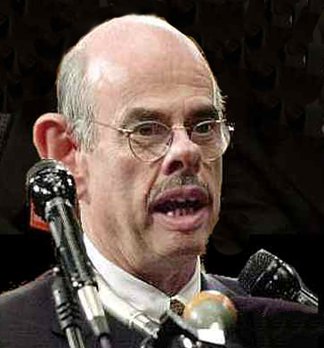
Apparently, the Federal Trade Commission is having a jobs summit of its own but is focusing on how to rescue the journalism industry and one of the keynote speakers this week was Henry Waxman (D-Mars) who trooped down from the Hill in order to make his case for a government bailout of the newsies.

"We cannot risk the loss of an informed public and all that that means" because of market failure, Waxman said. But he also said the government would need to tread carefully and he set up some ground rules for considering possible solutions that ranged from tax law changes and nonprofit status to antitrust law changes to a review of "cross-media laws that may constrain the commercial vitality of the industry." He said he had an open mind about all the proposals and thought they should all be discussed.

The author of cap and trade, legislation that will essentially dictate what forms of energy we all will be permitted to subsist upon and which as a result plays picking winners and losers with respect to entire industries and the people it employs is worried about the need for government to tread carefully? Beautiful.

First, he said, there should be consensus both inside and outside the media industry that the proposal is in the public interest. Second, it would need bipartisan support and "vigorous enforcement from both sides of the aisle." He said any public model would have to address the concern that "government control of journalism would lead to government control of content," as well as articulating the scope and dollars required, plus what the source of revenues would be.


Vigorous enforcement? Like what? Fines? Jailtime like Pelosi refused to rule out for non-compliance with Obamacare? And how exactly do you “address” concerns that the feds and its bureaucratic lackeys won’t be calling the content shots? You can’t because there is no explaining away the inevitable conclusion that federal money will have a corresponding effect on content control. And sources of revenue? Please.

And who was at the FTC journalism jobs fair?

The morning session also featured media policy activists, public broadcasters and proponents of nonprofit journalism making the case for government funding of the media.


That sounds like quite a diverse group who would be stellar defendants of the 1st amendment.

And what did some of these free speech advocates have to say for themselves:

"As a civil society, we don't trust the open market or the free market" to provide such valuable services, said Jon McTaggart, the senior vice president and chief operating officer of American Media Group, and neither should the media be allowed to suffer because of market forces.

Valuable services like putting food on the table, flying virtually anywhere in the world, performing open-heart surgery and providing automotive transportation. Uhh, put a partial scratch through that last one.

Eric Newton, vice president of the journalism program at the Knight Foundation, called the idea that government has never been involved in media a "mythology. "It's a bogus argument that just keeps us from doing the right thing," he said.


Newton’s exactly right. One of the finer examples of the government gettin' involved in the journalism business was back when President Lincoln didn't trust the free market to provide such a valuable service to society either and was shutting down newspapers left and right and throwing people in jail for what they were printing during the Civil War.

The fact that many of these people who are now lining up at the government trough cut their teeth in underground journalism and the free speech movement of the 60s or who are its direct cultural and ideological descendants and who'd rather swing from their love beads than be caught shilling for federal handouts is particularly galling and demonstrates just how intellectually bankrupt the statist nature of the New Left really was.

Way to stand on principle, guys

Thursday, September 8, 2011

Great moments in the history of crony capitalism (UPDATED)


please scroll down for update...


Entrance observation: Over $500 million in loan gurantees at near-zero interest rates and they still couldn't make it work tells you pretty much all you need to know about the current competitiveness of green technology.


A politically connected solar company that pocketed a half billion dollar government loan, only to shut its doors, fire workers and file for bankruptcy, benefited from a series of breaks in securing the federal funds -- including an interest rate lower than other green energy projects, iWatch News and ABC News found.

The $535 million loan to Solyndra Inc., issued by the U.S. Department of Treasury's Federal Financing Bank, included a quarterly interest rate of 1.025 percent, the government bank reported in July. Of 18 Energy Department loans cited in the bank's report, Solyndra's rate was lowest. Eight other Energy Department projects, each also backed by the Federal Financing Bank, came with rates three or four times higher, the report shows.

That treatment is in keeping with the history of the loan to the California solar panel maker, an arrangement inked in September 2009 with great fanfare -- and touted, not long after, during a factory visit from the president. Monthly government bank reports filed since then reveal Solyndra's rate as the lowest for any energy-related project in nearly every report; in every case its rate was well below that of most energy projects, which ranged from cutting-edge electric car makers to wind and solar ventures.

The Department of Energy and Solyndra officials begged to differ saying the loan from the bank and its terms were based upon a formula and hard data such as when the loan was granted and the length of the repayment period. That would appear to be at odds, however, with evidence that Solyndra may not have been such a solid bet.

But records show the advantageous terms came in spite of red flags about the risks of investing in Solyndra. In 2008, as the loan agreement was moving forward, an outside rating agency gave the deal with a B+ grade, a less than optimum score, according to records obtained by iWatch and ABC under the Freedom of Information Act. That same year, the records show, Dun & Bradstreet assigned the company's credit appraisal as "fair."

Analysts say there were warning signs about the deal from the start, when Obama's Department of Energy pitched its first energy loan guarantee as a symbol of the expanding green tech movement. Yet the administration repeatedly took steps that would seem to benefit Solyndra: the Department of Energy announced its loan commitment before all due diligence was completed -- later raising concerns from auditors; the president made a personal visit to tout the company's prospects; and the department agreed to grant Solyndra fast-track approval.


And about that Federal Financing Bank?

The Federal Financing Bank, created by Congress in 1973 as a part of Treasury to reduce the cost of borrowing, referred questions about the Solyndra loan to Treasury. "We don't talk to journalists," a Bank employee told iWatch last week.
Transparency!

And now the money shot you've all been waiting for:

Solyndra's most prolific financial backer is George Kaiser, an Oklahoma oil billionaire who was a bundler of campaign donations for Obama's 2008 race. Kaiser's Argonaut Ventures and its affiliates have been the single largest shareholder of Solyndra, according to SEC filings and other records. The company holds 39 percent of Solyndra's parent company, bankruptcy records filed Tuesday show.

Under terms of the bankruptcy filing, investors including Argonaut -- which led a $75 million round of financing for Solyndra earlier this year -- will stand in line before the federal government and other creditors.

"federal government" = "your tax dollars"

And dig this:
Questions have long persisted about why Obama chose Solyndra to be the first green energy company to benefit from the federal loans program. In May, iWatch and ABC reported that the Energy Department announced its commitment to back Solyndra without first receiving full marketing and legal reviews. That shortcut drew criticism from government auditors, who accused DOE of favoring some applicants, like Solyndra, over others.

And Obama's Office of Budget and Management viewed the deal as riskier to taxpayers than DOE had, iWatch found.
(italics, ours)


As would be expected, Kaiser is staying mum on this whole deal.

So, if you're scoring at home, you have over a half billion in federal loan guarantees largely up in smoke, 1,000 jobs neither created nor saved and most likely, a congressional investigation into an apparent sweetheart deal for a heavyweight Presidential donor.

Because of the lack of competitiveness of green technology in its current state, it remains the greatest example of the federal government picking winners and losers, though, unfortunately, we have yet to see any winners even as designated so by the federal government.


(UPDATE #1): Thank god for bridges, roads and choo-choo trains because we don't think the President will be talking a whole lot about green jobs tonight in his jobs speech.


FBI agents armed with search warrants descended Thursday morning on bankrupt solar company Solynrda.

The investigation comes after a request by the Department of Energy's inspector general, FBI spokesman Peter Lee told NBC Bay Area News.

Agents arrived at Solyndra at 7a.m. and were examining the factory. Solynrda has a skeleton crew of 100 workers on the scene, who are closing the factory down.

"It's been an interesting [two weeks]" says Solyndra spokesperson Dave Miller, referring to both the bankruptcy and the FBI raid. "I don't know what they're looking for...but I haven't seen them take anything."

Solyndra filed for bankruptcy last week, shocking both workers and the Obama administration, which had given the startup $535 million in low interest loans.

The announcement was a devastating blow to Mr. Obama who is set to deliver a speech on job creation Thursday evening.

Congress has demanded a hearing into the matter. Wednesday the company was reported to be for sale.

There are no reports of any arrests at this time.

Solyndra officials made numerous visits -- 20 -- to the White House, according to logs and reporting by The Daily Caller.

Solyndra officials in the logs included chairman and founder Christian Gronet and board members Thomas Baruch and David Prend, according to the Caller.

OK, here's the part where we are going to sound totally paranoid: Wow. That didn't take long. Mere days after filing for bankruptcy the FBI comes swooping in. Really? We're all for quick action and everything but considering who the FBI ultimately answers to, we can't help but think this is all a little too good to be true. Totally paranoid, right?

H/T: W.C. Varones

Thursday, February 16, 2012

Great moments in the history of crony capitalism


.


Change


Sanjay Wagle was a venture capitalist and Barack Obama fundraiser in 2008, rallying support through a group he headed known as Clean Tech for Obama.

Shortly after Obama’s election, he left his California firm to join the Energy Department, just as the administration embarked on a massive program to stimulate the economy with federal investments in clean-technology firms.


Following an enduring Washington tradition, Wagle shifted from the private sector, where his firm hoped to profit from federal investments, to an insider’s seat in the administration’s $80 billion clean-energy investment program.

He was one of several players in venture capital, which was providing financial backing to start-up clean-tech companies, who moved into the Energy Department at a time when the agency was seeking outside expertise in the field. At the same time, their industry had a huge stake in decisions about which companies would receive government loans, grants and support.

During the next three years, the department provided $2.4 billion in public funding to clean-energy companies in which Wagle’s former firm, Vantage Point Venture Partners, had invested, a Washington Post analysis found. Overall, the Post found that $3.9 billion in federal grants and financing flowed to 21 companies backed by firms with connections to five Obama administration staffers and advisers.


Picking winners and losers in any particular industry is not the business that a presidential administration should be in. But it's particularly galling when that administration keeps picking the losers... after they were told by third-party auditors and investigators that they were losers as in the case of Solyndra, the DOE's $535 million black hole.


Not coincidentally, Fred Upton (R-MI), who has been wishing to speak with White House officials knee-deep in the DOE's clean energy loan program, is running out of patience with the White House's recalcitrance.


Staffers who once worked for White House Chief of Staff Rahm Emanuel may have to answer questions about their involvement in a botched solar energy deal.

Congressional Republicans on the House Energy and Commerce Committee are putting together subpoenas for five White House aides who allegedly worked to pour more than $500 million in federal loans guarantees into Solyndra, a California solar power company that has since gone defunct. It filed for bankruptcy last year despite the loan support.

The House Energy and Commerce Committee plans to meet on Friday to issue subpoenas for five executive branch employees that they say were involved in the Department of Energy loan given to Solyndra. This will be the third subpoena the committee has considered to obtain information or testimony regarding the Solyndra case.

The staffers being targeted include Kevin Carroll, Kelly Colyar and Fouad Saad of the Office of Management and Budget, Heather Zichal, a White House aide who worked on energy and Aditya Kumar, who worked for Rahm Emanuel in the West Wing and whose name appears in emails on the subject of Solyndra.


It has been one year since the committee started investigating the Solyndra meltdown and to date, the White House has yet to comply with the committee's desire for a sit down.

This must be more of that transparency we've been hearing so much about.

.

Saturday, November 5, 2011

College football Saturday round-up and open thread

*


Alright, gang, former fellow Seminarian, Jonesy, is back in the house with his take on this week's games and the state of college football with respect to conference re-alignment.


Greetings and Salutations,


With each week the games seem to be getting better and better. Last weeks Stanford’s 3OT win over the Trojans was the best game of the year. Throw in Georgia Tech upsetting an undefeated Clemson team, a “Hail Mary[i]” win by Ohio State over Wisconsin and the last minute drive by my Nittany Lions[ii] and you had the best day of the season. It seemed like momentum was building towards another outstanding weekend of football. Especially with the de facto BCS Championship play-in game between #1 LSU & #2 Alabama.

Unfortunately, aside from that game, not much else on the docket excites me. I’m not all that interested in seeing Oklahoma State demolish a plucky Kansas State team. Nor am I all that excited about seeing a depleted South Carolina team play an over-rated Arkansas.

Or am I? Maybe, just like my beloved Lions, I’m waiting in the weeds as higher ranked teams fall this weekend. Maybe on my trip to Vegas I will lay down some money at 100-1 odds that PSU will run the table and, through numerous happenstances, get to revenge its early season loss against Alabama in the BCS Title game. Stranger things have happened[iii].


Non Football Football Thought

I decided to take a little tangent from covering the games on the field and spend some time coving the games off the field, i.e. the continuing conference musical chairs. Here is my take on the winners and losers of this latest (but surely not last) round.


Winner: The Big 10+2. Who would have thought this conference would become the big winners just a couple of months from nearly imploding. I’d trade the perennial over-rated Texas A&M (4th best team in the state) for TCU (2nd best[iv]) any day of the week. Further, with Missouri’s seemingly suicidal intent to jump into the SEC[v], the Big 10+2 gets a huge upgrade with the far superior (in both football and hoops) West Virginia addition. Yes, it makes little geographic sense to add WVU to this Southwestern & Midwest based conference. However, WVU[vi] had little choice in the matter with the ongoing collapse of the Big Least. All in all, the Big 10+2 came out way ahead.


Loser #1: SEC. Yes, you heard right. The SEC lost this round. Sure A&M “opens” up the Texas market. But really, the badass SEC had to settle for this program. Getting UT or Oklahoma would be big, A&M, not so much. And don’t even get me started on Missouri. These Big 10+2 rejects don’t belong playing Florida, Georgia, Alabama etc. Basically, the conference picked up a couple of homecoming opponents that should quickly settle in the bottom tier along with Ole Miss and Vanderbilt.


Loser #2: The Big Least. Why couldn’t they just fold up their football operations and concentrate on basketball. Even with the loss of Syracuse and Pitt, they are still the premier hoops conference in the country. But no, they had to go for the leftover scraps like Central Florida, SMU and Houston. These teams are afterthoughts in their own cities and states. And don’t get me started on Navy and Air Force. Listen, like most normal Americans, I love the Academies. As a graduate of one myself, I know how hard it is to handle both football and the heavy academic and regimental workload. But football wise, they don’t really add much of anything to this conference. Finally, we get to Boise State. A top program that can play with anyone. I just think it’s ridiculous that they are going to be playing multiple games each year in Connecticut, New Jersey and Florida. It makes no sense.

**


Games I’ll be Watching

LSU at Alabama: These are the two best teams in college football this year (by a wide margin) and I can’t wait. Like most occasions, I have no idea who is going to win. I’m pulling for Alabama primarily because I usually root for the home team and I’d like to see a team that beat PSU finish #1[vii].


Oregon at Washington: I simply will watch to get a feel for next weeks Oregon at Stanford game. Seeing Oregon play against a decent common opponent might provide some insights into who will win next week in the battle of Top 10 teams. Besides, there is always the chance of an upset.


Texas Tech at Texas: Like I said, slim pickings this weekend. I’d like to see this matchup of high scoring offense verses rugged defense. Plus, for some reason I take pleasure in seeing Texas, with all its resources, struggle this year to stay relevant and keep its alumni happy.


That’s about all I have this week. I hope you enjoy the games. Next week, I plan on covering the new and exciting world of watching games I bet on legally from the sports book in Vegas.

***


[i] Is it really a Hail Mary if there is still time on the clock, the losing team only needs to get into field goal range and the pass play that won the game was the result of a horrible blown coverage by a weak-ass defense? I’m just asking.

[ii] Actually, the PSU-Illinois fumble-fest might have set the Big 10+2 back a few years. It was not as bad as the infamous 6-4 Iowa win over PSU but it wasn’t good. At least the good guys won this time.

[iii] Not really. But I am going to lay some money down on this bet just to show my faith.

[iv] I’d rank the programs Texas, TCU, Texas Tech and then A&M. That’s just me. Tech has had more recent success than the Aggies have had in years.

[v] Still pending but looking like a foregone conclusion.

[vi] West Virginia also made the smart hire with their head coach who has strong ties to the Texas and Oklahoma recruiting region.

[vii] This provides me with the completely unjustified idea that PSU could be the 2nd best team in the country.


(ed. note: That's right folks, as you read this, we're coaching up Jonesy on the finer points of legalized gambling. No more bookies or shylocks, for this weekend, at least.

We're absolutely baffled as to why the SEC decided to pick up A&M and Missouri. The SEC, because of their dominance in football over the rest of the country, was the only conference in the nation that could afford to set back and do absolutely nothing... zip, nada, zilch with respect to conference expansion. Those two schools bring nothing to the table with respect to football and the SEC loses a bit of its regional identity along with it. There was nothing to be gained by bringing aboard those two schools. Dumb move.

Gambling advice: Alabama vs. LSU. This game is going to come down to a late field goal. Take LSU getting 5 points at Alabama.)


* Alabama running back, Trent Richardson

** Oklahoma State wide receiver, Justin Blackmon

*** Oregon running back, LaMichael James

Tuesday, September 27, 2011

Nice car company you got there... shame if anything happened to it


About a week and a half ago we posted a Ford Motor Co. commercial that took a not-too-veiled swipe at the bailouts received by Ford's domestic competition, General Motors and Chrysler.

Ford driver "Chris":
“I wasn’t going to buy another car that was bailed out by our government. I was going to buy from a manufacturer that’s standing on their own: win, lose, or draw. That’s what America is about is taking the chance to succeed and understanding when you fail that you gotta’ pick yourself up and go back to work. Ford is that company for me.”

If you clicked on the link, you would've found that the video has been removed by the user.


Hmmmm....

As part of a campaign featuring "real people" explaining their decision to buy the Blue Oval, a guy named "Chris" says he "wasn't going to buy another car that was bailed out by our government," according the text of the ad, launched in early September.

"I was going to buy from a manufacturer that's standing on their own: win, lose, or draw. That's what America is about is taking the chance to succeed and understanding when you fail that you gotta' pick yourself up and go back to work."

That's what some of America is about, evidently. Because Ford pulled the ad after individuals inside the White House questioned whether the copy was publicly denigrating the controversial bailout policy CEO Alan Mulally repeatedly supported in the dark days of late 2008, in early '09 and again when the ad flap arose. And more.

With President Barack Obama tuning his re-election campaign amid dismal economic conditions and simmering antipathy toward his stimulus spending and associated bailouts, the Ford ad carried the makings of a political liability when Team Obama can least afford yet another one. Can't have that.

The ad, pulled in response to White House questions (and, presumably, carping from rival GM), threatened to rekindle the negative (if accurate) association just when the president wants credit for their positive results (GM and Chrysler are moving forward, making money and selling vehicles) and to distance himself from any public downside of his decision.

In other words, where presidential politics and automotive marketing collide — clean, green, politically correct vehicles not included — the president wins and the automaker loses because the benefit of the battle isn't worth the cost of waging it.

Whether or not Ford supported and/or still supports the bailouts with respect to this situation is completely irrelevant. This represents yet another danger of corporatism/crony capitalism: the inherent thuggish nature of cronyism when the competition starts making you and your "winner", in the "picking winners and losers" schemes, look like a loser.

If you want just one more reason why the government should stay the hell out of private sector matters, count altering the business practices of the "competition" with innuendo and/or outright threats as that reason.


And we did warn driver Chris of his imminent proctology exam by the IRS. We would not want to be this guy, right now.

Saturday, November 9, 2013

Message: "I care" *


.


A couple of weeks back when it became news that millions of American were losing their healthcare coverage, it came as a surprise to a majority of Americans that had heard the President on numerous occasions reassure the country that if you liked your current healthcare plan, you could keep it, and often times closing out that statement with a definitive “period.”


Predictably, the water-carriers in the state-controlled media when into spin mode. They reasoned that the President did not flat-out lie to the public because no one was losing their coverage, they were merely “transitioning” from their old “sub-standard” coverage into better coverage. That this decision was taken out of your hands was merely demonstrable of what a clueless rube you are and that we should be thankful of the wise and benevolent actions of a federal bureaucracy thousands of miles away made possible via ObamaCare… you’re welcome.


Of course, we didn't hear anything about this "transition-y" thing prior to October 1st but no matter...


So, imagine our surprise when Thursday evening, the President in an interview with Chuck Todd on NBC News, said he was sorry that all these millions of American were losing their current health coverage “based on assurances they got from me.”


So confusing. Why was he essentially apologizing for removing us from our “sub-standard” policies when as single males it was clearly in our best interest to have a healthcare policy that covered us for pregnancy/maternity services? That would be more comprehensive, would it not?


It didn't take long. Back into the spin cycle:


Of course there will be winners and losers as a result of ObamaCare


Again, this faint support for the law was not uttered prior to October 1st.


Let the tweet-fest begin:


Call us cynical but we’re skeptical of the president’s apology. The law which bears his name absolutely counts on younger healthier people paying for services/coverage they won’t use to cover that which others will use but can’t afford, i.e. the sick and/or elderly.


With insurance companies no longer able to deny coverage to those with pre-existing conditions, good luck with getting enough of the “young invincibles” to prop up this wretched scheme. #implosion


C’mon… without ObamaCare you would’ve never have been introduced to the terms “adverse selection” and “death spiral”.


* During the 1992 presidential campaign, those were the guidance notes given to George H.W. Bush by his aides prior to a speech meant to convey his empathy with the American people during the early nineties recession. Missing the “guidance” portion, Bush recited those three words verbatim resulting in the most clunky, insincere and tone deaf moment of his Presidency.


.


Monday, January 23, 2012

Quickies


.

A round-up of news items, articles, columns and blog posts that caught our eye this past week or so.


George Will on the importance of the Supreme Court's decision on ObamaCare:


The Obamacare issues of Medicaid coercion and the individual mandate are twins. They confront the court with the same challenge, that of enunciating judicially enforceable limiting principles. If there is no outer limit on Congress’s power to regulate behavior in the name of regulating interstate commerce, then the Framers’ design of a limited federal government is nullified. And if there is no outer limit on the capacity of this government to coerce the states, then federalism, which is integral to the Framers’ design, becomes evanescent.

So, the time the court has allotted for oral argument about Obamacare is proportional to the stakes. This case is the most important in the more than half a century since the Brown v. Board of Education cases because, like those, it concerns the nature of the American regime.


Evanescent. Ahem. vanishing; fading away; fleeting.


Will's right, however, as if the Supremes uphold the mandate, the precedent will have been set that there is effectively nothing Congress cannot compel you to do. Crazy notion but we don't think that's what the Founders had in mind for the federal government.


Sarah over at Lipstick Underground is no fan of Newt Gingrich but appears to dislike his wife even more:

The REAL ick factor in all this is wife #3, Callista Bisek Gingrich, mistress during marriage #2 and potential First Lady of the United States. Just let that sink in for a minute.

I hold women to a higher standard then men. I’m hardly a prude, and stuff happens in marriages that is just between spouses. But the simple truth is, we are the gate keepers to societal standards around here...and I’m not interested in having to call some home wrecking hussy “First Lady.” She’s no lady and I don’t want her in my White House.

We... had not considered that angle before.


Sir Charles at Doo Doo Economics attended the 28th annual San Diego County Economic Roundtable and provides his round-up here ending with this observation:

All the economists and speakers shared one common sentiment. The 2012 election year will decide if small or big government will rule our futures. My take on the situation is that a smaller government role is warranted. Keynesian economics has run its course. Small tweaks to capitalism work but socialist cronyism is not a small tweak. Making poverty and dependence comfortable and allowing the state to pick winners and losers is not wise in any civilization. Only the passion of self interested individuals who believe in their own ideas and benefit from taking risks can create a vibrant economy. No amount of marketing "green" or other state solutions will impassion true believers, investors and customers like an individual with an innovative idea.

Look no further than Europe to see how that statist/entitlement model is working. Yet, the ruling party at the federal level and in many states including our home state of California seem quite content to be just that... content to follow the status quo when the status quo will lead to certain ruin.


So, just how did that "open marriage" request/demand that was to end Newt's candidacy work out?

Gingrich trailed Romney by double digits just days ago. But that changed quickly after Gingrich's performance in Thursday's night CNN Southern Republican debate. The former House speaker was able to turn his biggest liability -- accusations by his second wife, Marianne, that he wanted an "open marriage" -- into an asset, drawing two standing ovations for assailing the media for bringing up the allegations.

If there was going to be a primary out there where allegations of marital infidelity were going to register with the state's social conservative-leaning Republican voters, it would've been South Carolina and yet Newt wins going away. So, what is it?: Newt's skillful debate performance in criticizing the (northeastern) media or a collective electoral shrug of the shoulders seemingly saying, "It's Newt, of course he's going to want to get a little freaky." Next.

Oh, by the way, Newt carried the majority of married women.


Totally related (via Instapundit):

MORE STILL: A female reader writes that Gingrich may not have been so hurt by ex-wife Marianne’s TV interview:

Hate to say this and don’t use my name, but I watched the interview and thought

“You bitch, he cheated on his first wife with you. What the heck did you expect?”


Kinda parallels what Sarah was saying above, don't it?


How's that Arab Spring working out over in Egypt?

Terrific: Egypt Islamists win 70 percent

Islamists won a combined 70 percent of parliamentary seats in the first election after Egypt’s revolution, according to official results Saturday that cemented the victory of rival religious parties belonging to the Muslim Brotherhood and the more fundamentalist Salafists.

More fundamentalist? Again, terrific.


Don't think we're going out on a limb by saying life won't be getting much better for this particular set of protesters.


KT links to a fine piece by Charles Murray on the changing face and increasing isolationism of the elites in our country:

And the isolation is only going to get worse. Increasingly, the people who run the country were born into that world. Unlike the typical member of the elite in 1960, they have never known anything but the new upper-class culture. We are now seeing more and more third-generation members of the elite. Not even their grandparents have been able to give them a window into life in the rest of America.

It's long but worthwhile and caused us to recall Angelo Codevilla's epic manifesto from the summer of 2010 "America's Ruling Class -- And the Perils of Revolution"

A sampling:

Today's ruling class, from Boston to San Diego, was formed by an educational system that exposed them to the same ideas and gave them remarkably uniform guidance, as well as tastes and habits. These amount to a social canon of judgments about good and evil, complete with secular sacred history, sins (against minorities and the environment), and saints. Using the right words and avoiding the wrong ones when referring to such matters -- speaking the "in" language -- serves as a badge of identity. Regardless of what business or profession they are in, their road up included government channels and government money because, as government has grown, its boundary with the rest of American life has become indistinct. Many began their careers in government and leveraged their way into the private sector. Some, e.g., Secretary of the Treasury Timothy Geithner, never held a non-government job. Hence whether formally in government, out of it, or halfway, America's ruling class speaks the language and has the tastes, habits, and tools of bureaucrats. It rules uneasily over the majority of Americans not oriented to government.


And dig this from Russell K. Nieli:

Participation in such Red State activities as high school ROTC, 4-H clubs, or the Future Farmers of America was found to reduce very substantially a student's chances of gaining admission to the competitive private colleges in the NSCE database on an all-other-things-considered basis. The admissions disadvantage was greatest for those in leadership positions in these activities or those winning honors and awards. "Being an officer or winning awards" for such career-oriented activities as junior ROTC, 4-H, or Future Farmers of America, say Espenshade and Radford, "has a significantly negative association with admission outcomes at highly selective institutions." Excelling in these activities "is associated with 60 or 65 percent lower odds of admission."


Exit question: Sorry for going all pitchfork-wielding populist but how have all those Ivy League degrees littered about Wall Street and Washington D.C. been working out for this country, lately?


OK, gang. That's it for now. It's a new week so let's get to it.

Sunday, December 20, 2009

Big Green really is the next green

No one in the world exercised more influence on the events leading up to the Copenhagen conference on global warming than Dr Rajendra Pachauri, chairman of the UN’s Intergovernmental Panel on Climate Change (IPCC) and mastermind of its latest report in 2007.

Although Dr Pachauri is often presented as a scientist (he was even once described by the BBC as “the world’s top climate scientist”), as a former railway engineer with a PhD in economics he has no qualifications in climate science at all.

What has also almost entirely escaped attention, however, is how Dr Pachauri has established an astonishing worldwide portfolio of business interests with bodies which have been investing billions of dollars in organisations dependent on the IPCC’s policy recommendations.

These outfits include banks, oil and energy companies and investment funds heavily involved in ‘carbon trading’ and ‘sustainable technologies’, which together make up the fastest-growing commodity market in the world, estimated soon to be worth trillions of dollars a year.


Dude is like Al Gore on steroids. Or, with all the jack that Algore stands to swim in, maybe it’s the other way around. Tough call.

What more is needed to be known about the faith-based AGW zealot wing of the Star Wars cantina scene than the fact that a choo-choo engineer with a doctorate in economics pretty much calls the shots with respect to AGW policy, worldwide?

Speaking of which, how did Copenhagen work out for ya, doc?

And speaking of what more is needed to be known, the EU’s Emission Trading System, which will be the model for any carbon credit trading system should cap and trade survive abortion efforts over here is one giant white collar crime-riddled sham.

The top cops in Europe say carbon-trading has fallen prey to an organized crime scheme that has robbed the continent of $7.4 billion -- a massive fraud that lawmakers and energy experts say should send a "red flag" to the U.S., where the House approved cap-and-trade legislation over the summer amid stiff opposition.

In a statement released last week, the Europol police agency said Europe's cap-and-trade system has been the victim of organized crime during the past 18 months, resulting in losses of roughly $7.4 billion. The agency, headquartered in the Netherlands, estimated that in some countries up to 90 percent of the entire market volume was caused by fraudulent activities.

"These criminal activities endanger the credibility of the European Union Emission Trading System and lead to the loss of significant tax revenue for governments," Rob Wainwright, Europol's director, said in a statement.


We’re way passed “endanger”, pal. And one gets the feeling that the "loss of significant tax revenue for governments" is the real crime.

And something like this couldn’t happen over here because the value added tax (a Ponzi scheme in itself) that was part of the EU’s carbon trading market, won’t be part of the American cap and trade scheme? Think again.

U.S. Rep. Joe Barton, R-Texas, ranking member of the House Energy and Commerce Committee, said it's no surprise cap-and-trade systems are vulnerable to corruption.

Barton said he recently asked the U.S. District Court for the Central District of California to unseal the court file of Anne Sholtz, a former environmental executive who co-created the Regional Clean Air Incentives Market (RECLAIM) in 1999. Sholtz's company, Automated Credit Exchange, provided a market for companies to buy and sell pollution credits under RECLAIM. In 2005, Sholtz pleaded guilty to wire fraud for using counterfeit credits to pocket more than $12 million. Sholtz was later sentenced to one year of house arrest. (Barton wrote about Sholtz earlier this year for TheHill.com.)


When the government attempts to set up an artificial market that the free market wouldn’t normally recognize, corruption and graft is sure to follow.

Here again, we see the nexus of fascism and crony capitalism, terms that are inescapable when you are discussing picking the winners and losers in the national and global Environmental-Industrial complex.

Saturday, October 22, 2011

Yet another green technology (overseas) boondoggle

*


On the bright side of things, we guess we should be thankful that they have not yet gone out of business like Solyndra or are massively in debt like SunPower.


With the approval of the Obama administration, an electric car company that received a $529 million federal government loan guarantee is assembling its first line of cars in Finland, saying it could not find a facility in the United States capable of doing the work.

Vice President Joseph Biden heralded the Energy Department's $529 million loan to the start-up electric car company called Fisker as a bright new path to thousands of American manufacturing jobs. But two years after the loan was announced, the job of assembling the flashy electric Fisker Karma sports car has been outsourced to Finland.

"There was no contract manufacturer in the U.S. that could actually produce our vehicle," the car company's founder and namesake told ABC News. "They don't exist here."


This really is old news as this loan to Fisker and the fact the cars would be built over in Finland was reported out on these very pages over two years ago..


And political connections, you ask? But, of course:

The loan to Fisker is part of a $1 billion bet the Energy Department has made in two politically connected California-based electric carmakers producing sporty -- and pricey -- cutting-edge autos. Fisker Automotive, backed by a powerhouse venture capital firm whose partners include former Vice President Al Gore, predicts it will eventually be churning out tens of thousands of electric sports sedans at the shuttered GM factory it bought in Delaware. And Tesla Motors, whose prime backers include PayPal mogul Elon Musk and Google co-founders Larry Page and Sergey Brin, says it will do the same in a massive facility tooling up in Silicon Valley.


Tens of thousands of luxury sedans and mass-produced sedans at... $97,000 and $57,400 a copy? Let us know how that works out.


And proving just how affordable green technology is becoming, the reported prices for those cars two years ago was $89,000 and $40,000, respectively.

And here's what was said with respect to the prices of the cars at the time (link above):

The Karma will target an exclusive audience -- Gore was one of the first to sign up for one. Mr. Fisker says all new technology starts out being expensive. He pointed to flat-screen televisions that once started at $25,000 but are now affordable to the mass market.

And our response:

It’s not entirely clear to us that $40,000/unit falls under the mass audience category but who the hell cares about the masses when one of the main beneficiaries of your largesse has dutifully signed up to have that thing sit in his driveway?


Think about it: billions upon billions of dollars in subsidies and the prices are going in the wrong direction unlike other areas of the tech sector (TVs and cell/smart phones) where no subsidies were received and real skin was in the game and the market determined the winners and losers.

Federally-subsidized green technology: Rising consumer prices, shipping jobs out of country and hooking up your buds... What's not to like about that?


* The Karma, Fisker's luxury sedan at the San Diego Auto Show in December of 2009. Yep, Karma's a bitch.

Thursday, April 22, 2010

ObamaCare: Coming attractions

Fearing that health insurance premiums may shoot up in the next few years, Senate Democrats laid a foundation on Tuesday for federal regulation of rates, four weeks after President Obama signed a law intended to rein in soaring health costs.

After a hearing on the issue, the chairman of the Senate health committee, Tom Harkin, Democrat of Iowa, said he intended to move this year on legislation that would “provide an important check on unjustified premiums.”

Mr. Harkin praised a bill introduced by Senator Dianne Feinstein, Democrat of California, that would give the secretary of health and human services the power to review premiums and block “any rate increase found to be unreasonable.” Under the bill, the federal government could regulate rates in states where state officials did not have “sufficient authority and capability” to do so.


That's right. The original ObamaCare bill that was sold on the premise that it would hold down premiums neglected to include the very mechanism(s) to hold down those premiums.

Fear not, though... help is on the way. The Secretary of health and human services will play judge, jury and executioner with respect to accepting/rejecting premium increases. Again... picking winners and losers! Corporatism and crony capitalism at its finest.

And dig this:

Reviving the proposal on Tuesday, Mr. Harkin said: “Rate review authority is needed to protect consumers from insurance companies’ jacking up premiums simply because they can. Protections must be in place to ensure that companies do not take advantage of current market conditions before health reform fundamentally changes the way they do business in 2014.”

“Currently,” Mr. Harkin said, “about 22 states in the individual market and 27 states in the small group market do not require a review of premiums before they go into effect — and perhaps even more. This is a gaping hole in our regulatory system, and it is unacceptable.”


Where to begin? First, let's just start with the understanding that Harkin is an economic ignoramous and shameless opportunist of the highest order. Good - got that out of the way.

"...jacking up premiums simply because they can.." We fail to see what is inherently wrong with that. In a free market, that "jacking up" comes with consequences... unless it doesn't. In a free market, the consumer (otherwise known as "the individual") will make the decision on whether or not that "jacking up" is acceptable or not based upon the service he is being provided.

Unfortunately, the healthcare industry is currently operating in a free market gray area where mandates and regulations drive up premiums and stifle competition, thus restricting the ability of the consumer to best respond in his own self-interest.

Under ObamaCare, the mandates and regulations only get worse thus creating the situation where premiums are expected to rise in the next few years as stated at the very top of this article. This is known as "price signaling" where healthcare insurers knowing they will be getting slammed by increased regulatory burdens (such as covering pre-existing conditions) will get out ahead of the curve and start, you know, jacking up premiums to cover those additional future expenditures.

The ObamaCare acolytes know this and are scrambling to prevent the inevitable from happening. What will result though is a tightening of the grip on the health insurance industry to where health insurance providers no longer feel it's profitable (yes, we referenced "profit") to stay in the business any longer thus reducing the competitive market and choices even further.

Sounds like a game plan for driving this bus towards the single payer/public option model, now doesn't it?

Perhaps Harkin and his Capitol Hill kin aren't as clueless as we suspected.

Wednesday, July 18, 2012

Expecting different results?


.

Back in December of last year we reported out on the Navy's big biofuel push which started out with replacing a quantity of JP-5 which fuels the Navy's jets and helos. Here is what we said at the time:


The departments of Agriculture and the Navy announced plans Monday to buy 450,000 gallons of non-food biofuels -- at a cost of $16 per gallon -- in what will be the largest federal purchase of biofuels in U.S. history.

The purchase is being authorized by an executive order under the Obama administration's "we can't wait" campaign.

Administration officials gave no indication why they're not going through Congress, instead using a program that was established to promote rapid job growth by bypassing congressional debate.


Perhaps why Congress was not able to chime in on this decision was because the fuel that this biofuel is replacing, JP-5, which powers the Navy's jets and helos goes for about $4/gallon. Crazy theory, we know, but that might just explain it.


Back to real time: We went on to point out that one of the firms that was producing the biofuel was politically-connected. C'mon, you know where this is going. Back to December:


Two companies will participate in the program -- Louisiana-based Dynamic Fuels, a joint venture of Tyson foods and Syntroleum Corp, which makes biofuel from used cooking oil; and California based Solazyme, which makes fuel from algae.

Now we get to the part you've been waiting for:

Solazyme is not just any biofuels company, and its continued partnership with the Navy is not without crony connections. Its strategic advisor is T.J. Glauthier, Obama donor and part of President Obama’s transition team, as Solazyme’s website states:

TJ Glauthier is an advisor and corporate board member in the energy and “clean tech” sector. He advises companies dealing with the complex competitive and regulatory challenges in the energy sector today. He also served on President Obama’s White House Transition Team, where he focused primarily on the energy portion of the economic stimulus bill.


Here and now: Yeah, we are so cronying out our national security.


So, nearly 3 years after SecNav Ray Mabus* made the bold prediction that by the year 2020, half the Navy's fuel and power would come from green sources, how's all that working out?


On Wednesday, the Great Green Fleet is scheduled to make its first demonstration voyage in Hawaii, just as Mabus promised it would. But this is hardly the triumphant moment that the Navy Secretary depicted back in that hotel ballroom. Support for the Great Green Fleet — and for Mabus’ entire energy agenda — has collapsed on Capitol Hill, where both Republicans and Democrats have voted to all but kill the Navy’s future biofuel purchases. In the halls of the Pentagon, the Navy’s efforts to create a biofuel market are greeted with open skepticism. Even inside the environmental community, there’s deep division over the wisdom of relying on biofuels. And while the Navy has tried to deflect questions about the cost of its renewables push, a little-noticed Defense Department report shows that the Navy could spend as much as an extra $1.8 billion per year if it buys all the biofuel it’s pledged to burn.

Continue reading full article here:


The summary contains all the usual suspects but these paragraphs jumped out at us:

One reason why: Biofuel companies aren’t like high-tech firms that can start small and slowly scale up. A new biofuel refinery could cost anywhere from $65 to $300 million to build. (And that doesn’t even begin to address the costs involved with farming the land or transporting the product.) Investors are hesitant to lend out that kind of money without major customers who are committed to buy the fuel; customers are skittish about making those kinds of commitments until they know the biofuel-maker can actually deliver. Currently, there’s not a single commercial-grade biorefinery operating in this country (although several are in the works).

“You need that big anchor customer. And the Navy can afford a premium, because it knows how much petroleum really costs,” explains Brook Porter, an investment partner at the venture capital firm Kleiner Perkins Caufield & Byers, which has put more than $1.5 billion into so-called “clean tech” companies. For some of these firms, a big military contract could mean the difference between life and death.

A struggling, expensive industry that is dependent upon one big customer is ripe for the temptation of picking winners and losers and crony capitalism.


And at the end of the day, the Pentagon has simply worn out of Mabus' crusading for bio-fuels:

Even within the Pentagon, doubts about the program crept in. Top Defense Department officials, ordinarily supportive of green tech efforts, rolled their eyes when I asked about the Navy’s biofuel push. ”We’re not in the fuel production business. We’re not into scaling up new new fuels,” says Kevin Geiss, a former computational chemist now serving as the Air Force’s Deputy Assistant Secretary for Energy.


You know, it's a shame we can't figure out this energy independence thing as we keep finding more and more of that black sticky stuff underneath us here in the good ol' US of A.


* Being in the shipbuilding industry, we've been able to see some of Mabus' maneuvering. To say he is a political animal would be an understatement of the highest order.

.


Wednesday, April 24, 2013

Fisker: we scarcely knew ye


*


Of all the Department of Energy's green loan debacles and there have been many, Fisker stands above even the Solyndra disaster for a combination of audacity and incompetence.

(For previous posts regarding Fisker, please go here)

To quickly recap: Fisker Automotive was to build electric hybrids cars and was approved for $529 million in loan guarantees (more than they requested) from the Department of Energy to do so. Originally, the two models of cars they were to build were going to be in the $50,000-$60,000 range. In short order, that price escalated upwards to the $110,000 range for it's high-end model thus going from hybrid to luxury hybrid.

The cars were to be assembled at a plant in Delaware as part of the justification for this massive loan was that it would create good paying green manufacturing jobs here in the U.S. The only problem was that the Delaware plant never produced a single car, rather the assembly operations had been relocated to... Finland.

If you were thinking that perhaps a stipulation of the loan would be that our tax dollars wouldn't go to pay the salaries of Paavo, Heikki and the rest of the boys over there, you and we are in the same company.


After falling drastically short of production and sales goals (last year, they sold only 900 out of the 48,000 market-wide plug-ins), the cars plagued by mechanical, electrical and software problems and the failure of A123 batteries (yet, another DOE green loan #fail) last year was a harbinger of doom for Fisker and its aptly-named luxury model "Karma".

And on Monday, there was even more bad news for the car company that has not produced a car since last August.


From the New York Times:


The all-but-closed company skipped a large loan payment that was due on Monday, leading the federal government to take the unusually aggressive step of seizing $21 million from the company's cash reserves to begin recouping the $192 million in taxpayer dollars spent on the company's flawed strategy.


Which means, of course, Fisker is still on the hook to U.S. taxpayers to the tune of $171 million.


The fall-out from this extends beyond merely financial as green technology and our wisdom of taxpayer subsidies for green technology takes a P.R. hit:


Some environmental activists worry about the potential ramifications of a Fisker bankruptcy.

"We can't get to where we need to be in electric vehicles without government help," said Dan Becker, head of the Safe Climate Campaign, an advocacy group in Washington.


Mr. Becker, good sir, if $192 million committed out of $529 million promised isn't considered "help", we scarcely know what is and Fisker still managed to bollox things up.


And if the Obama administration has committed tax-payer money to other, more established auto-manufacturers like Ford and Toyota for their EVs without such disastrous results what is the explanation for what happened with Fisker?

From CBS News:


The Obama administration was warned as early as 2010 that electric car maker Fisker Automotive Inc. was not meeting milestones set up for a half-billion dollar government loan, nearly a year before U.S. officials froze the financing after questions were raised about the company's statements, newly released documents show.

An Energy Department official said in a June 2010 email that Fisker's bid to draw on the federal loan may be jeopardized for failure to meet goals established by the Energy Department.

Fisker continued to receive money until June 2011, when the Energy Department halted further funding. The agency did so after Fisker presented new information that called into question whether key milestones - including launch of the company's signature, $100,000 Karma hybrid - had been achieved, according to a credit report prepared by the Energy Department.

The December 2011 credit report said "DOE staff asked questions about the delays" in the launch of the Karma "and received varied and incomplete explanations," leading to the suspension of the loan.


Recall that the Fisker loan was approved in mid-2009 so it only took a year for the warning flags to go up. One year.

If the warning flags were going up that early, it would suggest perhaps that exercising some due diligence at the front end would've revealed that the loan should not have been made in the first place. Just sayin'.


As it stands, and we are being polite, what this represents is a dereliction of duty by Team O in the stewardship of the taxpayers' scratch. There's really no other way to look at it and yet there will be no repercussions for this willful negligence.

Committing tax-payer money to not-yet-market-ready technology is a losing proposition and committing the same to a start-up using that same technology that can't find sufficient private backing is a guaranteed losing proposition.

Unfortunately, Team O won't learn this lesson. The pursuit of currently suspect green technology subsidized by your money is an article of faith embedded in their collectivist religion and for the smartest kids in the classroom picking winners and losers with respect to directing the economy and "creating" jobs is a divine rite not to be left to the whims of market realities. That we should be so fortunate to be blessed by their benevolence and wisdom.


* Perhaps the quintessential image of the Karma. Being towed off the track after breaking down shortly into Consumer Reports test drive of the car. On the bed of that truck, the Karma achieves the greenie dream of a zero emissions vehicle lumbering down the highway at 50 mph.


Monday, July 19, 2010

Love, hate and speech


You'd be pleased to find out that Europe's myriad of human rights organizations aren't too keen on free speech rights. You see, free speech contains power and power is something that the ruling class is loathe to part with in any form or matter.

We didn't know much of the history of hate speech laws but we assume it should not be a huge surprise to learn that the largely arbitrary and vaguely-worded hate speech laws ginned-up at the U.N. over the decades were very popular with Soviet bloc states and 3rd world countries ruled by autocrats.

By empowering an active civil society, freedom of expression can thus be said to include its own safety valve against hatred, propaganda, and racism. There is no clear evidence that hate-speech laws foster a higher degree of racial and religious tolerance or help eradicate racism, and it is in any case both condescending and oppressive for the government to presume it knows which views and information its citizens can be trusted to express. Allowing the unquestionably racist and bigoted to speak their minds does not imply official endorsement of their views, just as declining to criminalize adultery does not imply state endorsement. Racism, religious hatred, and homophobia can and must be combated through an open and unfettered debate. When confronted with genuine hatred, it is perfectly possible — and morally imperative — to heed Holocaust survivor Elie Wiesel’s warning that “indifference is not an option” without resorting to coercion and thought control.


Did you get that? Don't let the government dictate to you what is and is not hate speech. Much like the current regulatory regime is picking winners and losers in the market place so do hate speech laws proffer special treatment upon its chosen "victims".

Don't fall for it. Be ungovernable.

The best way to combat hate speech is, in reality, via a robust freedom of expression. Bring the full arsenal of logic, reason, ridicule, mockery and love afforded by our 1st amendment to the battle.

Embrace the hatred of hate speech laws.

Friday, May 22, 2009

Tuesday afternoon matinee (UPDATED... Again!)


(UPDATE #2):Last weekend we wrote about the yawning gulf between our elected representatives and the voting public being central to the angst of the public currently and, in particular, to that of the Tea Party movement.

From a stimulus bill that no one read to the energy/cap-and-trade bill that we can confidently assert was apeed-read by at least a single young House hall monitor, the Star Wars cantina scene extra that patched this thing together provides yet more evidence of this gulf.


I really have no idea what's in this bill. It's just a bunch of sciency stuff that the scientists told me to put in it.

Actually, we're not being fair to Waxman. There is at least one provision in the bill that we assume he's aware of: unemployment benefits. Buried deep within the near-1,000 page bill is a defacto admission that either the cap and trade scheme is a job killer or that this bill won't produce the amount of green jobs it promises... or, possibly both.
(H/T: Hot Air)

(here endeth this update)


(UPDATE #1):This is your government. This is your government on speed.

Democrats in the House Energy and Commerce Committee have taken a novel precaution to head off Republican efforts to slow action this week on a sweeping climate bill.

They are hiring a speed reader.

Republicans on the committee have said they may force the reading of the entire 946-page bill -- as well as major amendments that measure several hundred pages -- all aloud. This is a procedure lawmakers have a right to invoke. Republicans are largely against the bill, which aims to cut emissions of so-called greenhouse gases by more than 80% over the next half-century but would be costly.

Republicans haven't tried the tactic, but Committee Chairman Henry Waxman (D., Calif.) is prepared.

A committee spokeswoman said the speed reader -- a young man who was on door duty at the hearing as he awaited a call to the microphone -- was hired to help staffers. After years of practice, the panel's clerks can read at a good clip. But the speed reader is a lot faster, she said.

Looking on the bright side of things, we guess it’s a good thing that it’s the hall monitor that actually reads the crap this body legislates. And here’s the part where we try to muster some surprise or indignation about Congressional proceedings but we currently do not have the energy to do so. We try to keep that old adage in mind but while real sausage may contain no real net nutritional value, at least it tastes good.

(here endeth the update)


Recall the the boatload of public grief that both Hillary Clinton and Dick Cheney received for the secrecy held in attempting to form health care and energy policy, respectively during the first terms of Bill Clinton and George W. Bush.

So, how come the Star Wars cantina scene extra is not receiving the same scrutiny for fashioning the energy policy that will include cap and trade?

On Friday, House Energy and Commerce Committee Chairman Henry Waxman (D-Beverly Hills) released the closely-held details of his bill rationing energy use in the name of global warming, the American Clean Energy and Security Act of 2009 (ACES).

The details had been kept secret for two reasons. First, Waxman had been working desperately to buy off key Democrats on his own committee -- such as Virginia’s Rick Boucher and Michigan’s John Dingell -- whose states would suffer hugely under the “cap and tax” scheme, plus others with energy-intensive employers in their districts. He succeeded by, in short, giving energy use ration coupons to select employers for resale to some poor saps without Washington lobbyists.


As originally envisioned, these coupons or permits were to be bought and sold on a trading market - the proceeds of which were, in turn, going to fund a middle-classs tax cut. (Never mind the fact that the cost of purchasing these permits by private industry would’ve been passed right down the chain resulting higher gas, coal and natural gas prices). Turns out, however, a full 85% will be “given away”.

Picking winners and losers, baby!

Read more, here, and you get the sneaking suspicion that you may have seen this movie before. ACES may as well be "The Return of Porkulus" because just as Porkulus really had nothing to do with stimulating the economy, it appears that ACES, in actuality, doesn’t really have much to do with reducing carbon emissions.